
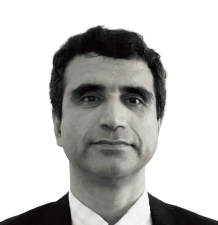
Hemant Ojha is a leading founder to establish and develop the Southasia Institute of Advanced Studies (SIAS), where he served as a Director, and then Chair for different years. His unwavering commitment to SIAS meant he continued to serve even from a distance after moving to Australia in 2013, later becoming a collaborator on various projects, sustaining his vital connection to the institution. From research mentoring to organisational management to strategic planning, Hemant’s contribution to SIAS development has been pivotal.
At SIAS, Hemant Ojha’s work has particularly focused on climate adaptation and resilience and urban water security. He was the principal architect of the Urban Water Forum (UWF), which has since become a flagship action research and policy activity of SIAS. His visionary approach for establishing SIAS was built upon three core pillars: first, to elevate Nepal’s valuable work and insights for active knowledge sharing regionally across South Asia; second, to broaden the institute’s scope beyond traditional forestry and natural resources to encompass wider environment and development issues, with a growing emphasis on climate change; and third, to cultivate SIAS as a critically engaged policy think tank firmly rooted in action research and community-based innovations.
Working through or in partnership (in later years) with SIAS, Dr. Ojha has played significant role as a policy analyst and advocate deeply engaged across a broad range of environment and development issues in Nepal and South Asia. His work specifically addresses critical areas such as urban water management, climate adaptation, agriculture and food security, and decentralized governance. He has consistently and actively engaged in climate policy discourses and explored institutional questions around rural-urban water governance in the rapidly changing socio-economic context and climate change. His commitment to tangible change on the ground is also evident in his volunteer work, supporting community groups and mentoring early career researchers.
Additionally, he is well-regarded in Nepal for his action research-based theorizing on governance, participatory practices, deliberation, and environmental social science concepts, which he uses to critically examine power dynamics, epistemic hegemony, and the potential for transformative change.
Currently, Dr. Ojha is affiliated with the Australian National University (ANU) and the Institute for Study of Development and Diplomacy (IFSD). His work continues to explore the intersection of environmental governance, climate change, and sustainable development. His dedication to leveraging collective expertise is further highlighted by his recent role as principal editor for the forthcoming book, “Restoring Forests, Improving Livelihoods in Nepal: Four Decades of Community Forestry,” a significant undertaking that brings together contributions from over 50 researchers and community forestry practitioners from Nepal and beyond.
You can explore Hemant Ojha’s extensive professional work and publications further through his LinkedIn profile, ORCID ID, and Google Scholar page.