
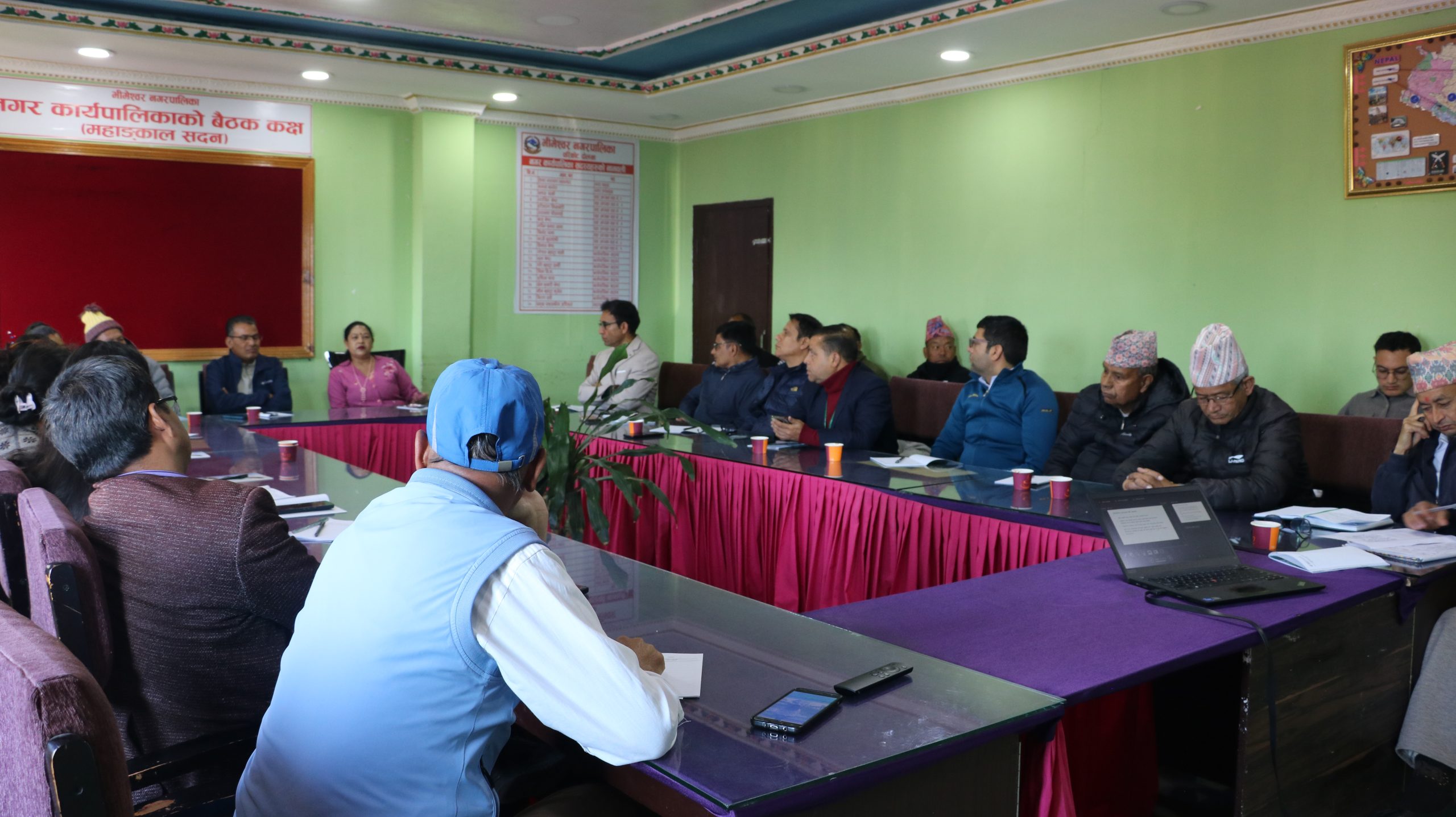
A multi-stakeholders dialogue titled “Multi-Stakeholders Dialogue on Addressing Challenges Related to Women-Led Agricultural and Forest Enterprises” was organized on 7 April 2026 in Bhimeshwor Municipality, Dolakha, by the Southasia Institute of Advanced Studies (SIAS) in collaboration with Federation of Community Forestry Users Nepal (FECOFUN), Dolakha. This event was organized following intensive interviews with 20 enterprises and local stakeholders. The findings were analyzed and shared during the event to highlight the issues identified and discuss ways to address the challenges.
The dialogue brought together a diverse group of participants, including entrepreneurs involved in nursery management, manure production, goat rearing, incense (dhup) production, and farming. The event was attended by key stakeholders such as the Deputy Chief of Bhimeshwor Municipality, the Chief Administrative Officer of the municipality, officials from the agriculture sector, managers from Laxmi Sunrise Bank and Agricultural Development Bank Ltd., the Division Forest Officer of Dolakha, the Chairperson of FECOFUN Dolakha, community forest advocate Bhola Khatiwada, and senior researchers Dr. Gyanu Maskey and Dr. Sushant Acharya from SIAS.
During the event, Mr. Jagnath Basnet, Chairperson of District FECOFUN, presented the findings of research conducted by SIAS. He shared the context of the dialogue, methodology of the research, and key results of the study, which were based on interviews with both entrepreneurs and relevant stakeholders. His presentation highlighted the major issues identified through the research and set the foundation for further discussion.
The discussion session was facilitated by Senior Researcher Dr. Sushant Acharya, who guided participants through an open and solution-oriented dialogue. Stakeholders reflected on current practices and explored practical ways to address the challenges faced by entrepreneurs in the agriculture and forest enterprise sectors. Key issues discussed during the dialogue included restrictions on grazing in community forests, rewilding in private forests, access to timber from community forests, duplication in grant provisions, the need for new models to support enterprises, subsidized loan opportunities, crop raiding, the feasibility of establishing a one-door system for enterprise registration, renewal, and tax clearance, and the facilitation of marketing for products supported by municipalities or other stakeholders.
Overall, the event served as an important platform for fostering collaboration among entrepreneurs, local government representatives, financial institutions, and sectoral stakeholders, contributing to the identification of actionable solutions for strengthening women-led agricultural and forest-based enterprises in Dolakha.