
Project Lead: Sanjaya Khatri
Project Team: Sushant Acharya and Gyanu Maskey
Partners and Collaborators: Southasia Institute of Advanced Studies (SIAS) and The University of Edinburgh
Duration: April 9-22, 2025
Brief Description of the Project:
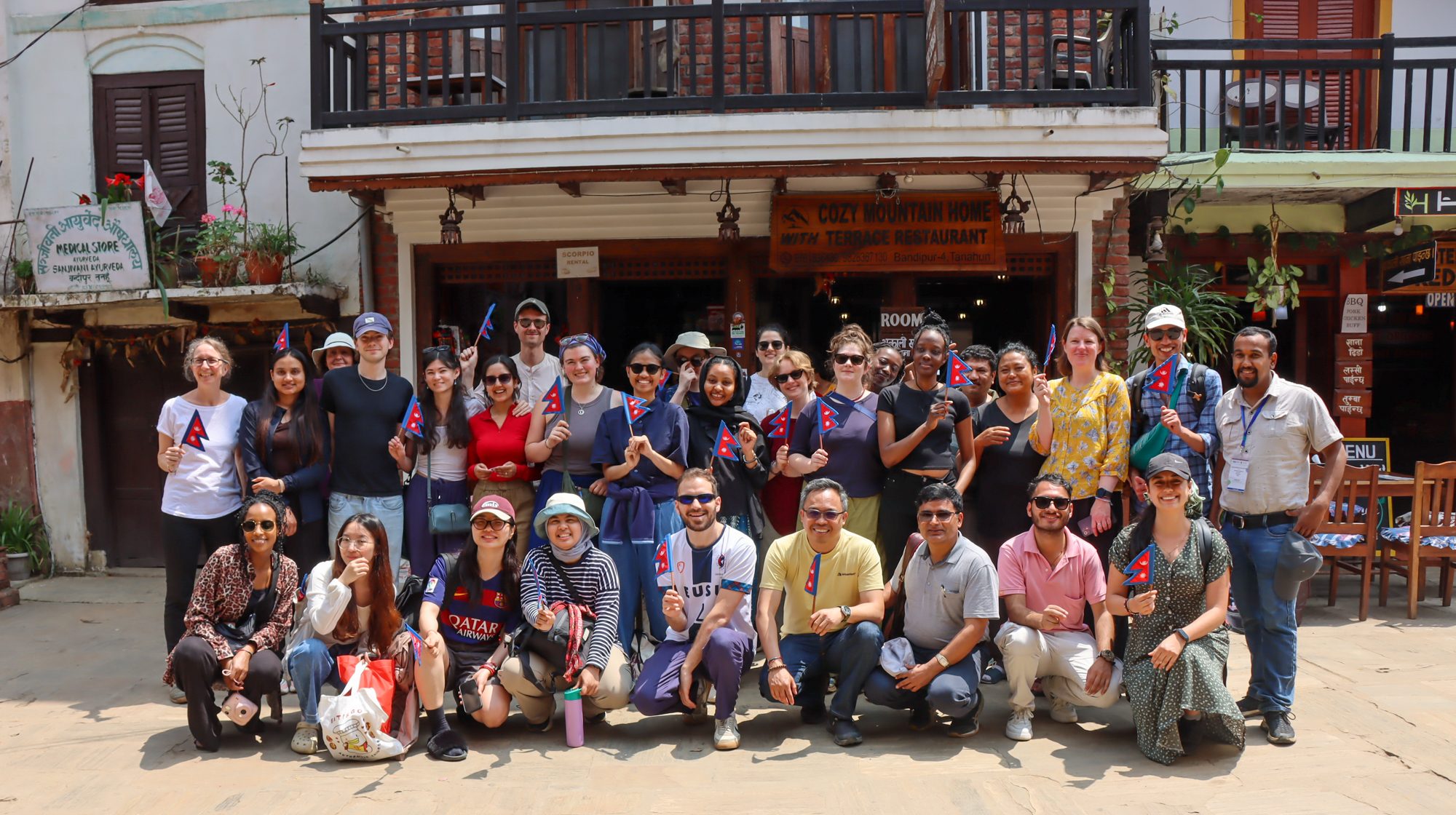
The Southasia Institute of Advanced Studies (SIAS), Nepal, in collaboration with the University of Edinburgh (UoE), UK, successfully conducted the SIAS–UoE Field Course 2025 from April 9 to 22. Since its inception in 2019, this annual summer school has evolved into a vibrant platform connecting international students with researchers, practitioners, policymakers, and community members across Nepal. The 2025 edition welcomed a new cohort of 19 Master’s students, 2 PhD researchers and 2 faculty members from UoE for a two-week immersive learning journey across Kathmandu, Pokhara, and Bandipur, combining academic exchange, field exposure, and cultural engagement.
The program commenced with a warm welcome and orientation session led by Sanjaya Khatri, followed by an introduction to SIAS’s thematic focus areas and research approaches by Dr. Gyanu Maskey. Similarly, presentations by researchers Dr. Dilli Prasad Poudel, Dr. Bishnu Hari Poudyal and Dr. Govinda Paudel provided students with foundational knowledge on key issues regarding the changing relationships between agriculture, forest, wildlife and people. During these sessions, individual phenomena were unpacked through case studies and empirical examples, enriching the students’ understanding and knowledge of the ongoing changes in rural Nepal.
The students then participated in experience sharing sessions from the leading organizations such as the Federation of Community Forestry Users Nepal (FECOFUN), the International Water Management Institute (IWMI) and ForestAction Nepal, during which experts including Dr. Arjun Chapagain, Dr. Santosh Nepal, Dr. Dibya Devi Gurung and Dr. Naya Sharma Paudel, shared perspectives on gender inclusion, community forestry, water security, climate resilience, ecosystem management and the role of research and activism in shaping environmental governance. In addition, a policy-focused session led by a senior government official from the Ministry of Forests and Environment centered on discussion about Nepal’s climate milestones, policy frameworks, and adaptation priorities. The session encouraged students to reflect on national climate commitments, financing challenges, and the broader implications for climate-vulnerable countries such as Nepal. Similarly, a guided tour of the Living Mountain Lab provided students with insights into practical innovations in the areas of ecosystem management, terrace farming, water management, renewable energy, and livelihood improvement.
The learning journey continued in Pokhara, where students visited the Annapurna Conservation Area Project (ACAP) office and the Institute of Forestry (IoF). These visits and sessions from experts including Dr. Rabin Kadariya, Suman Bhattarai and IOF faculties provided valuable insights into participatory conservation, academic research, and interdisciplinary collaboration in natural resource management. At the IOF campus, UoE students interacted with IoF faculty members and students to learn about academic programs, research initiatives, and global collaborations in forestry and environmental studies. Informal interactions and team-building activities with IoF students and UoE students strengthened peer learning and cultural exchange.
Community engagement was a highlight of the Bandipur segment, where students interacted closely with local stakeholders, including community forest user groups and local institutions. Through group-based fieldwork, student groups explored changing livelihood patterns, migration trends, forest–people relationships, and changing human-wildlife interactions. These engagements enabled students to understand the lived realities of rural communities and the socio-ecological dynamics shaping mountain landscapes.
The final day of the summer school was dedicated to student presentations based on their field-based learning and group research activities from their field work in Bandipur, which took place in three different villages of the Chhapeli Community Forest User Group (CFUG). Divided into three groups, each team explored key themes such as changing agricultural practices, evolving forest-human relationships and changing human-wildlife interactions. The presentations were lively, very thought-provoking and were enriched by feedback and reflections from session presenters in earlier days, Dr. Dilli Prasad Poudel, Dr. Bishnu Hari Poudyal, Dr. Govinda Paudel and Sanjaya Khatri. This was followed by lively question and answer sessions with students and faculty from the other groups
The program concluded with shared reflections from UoE students, faculty, and SIAS researchers, the exchange of tokens of love, and a farewell dinner featuring music, dance, and celebration marking the close of an enriching and unforgettable learning experience.
For reflections of the participants please read the blogs:
- Investments must match intentions”: Attempts to meaningfully engage with the complexity of Nepali environment and development challenges By Sam Staddon, University of Edinburgh (UoE)
- Nepal and the Path Back to Hope: On Emotion, Self-Reflection, and ‘Development’ By Shabira Damarti, (UoE)
- Because I Can, Should I? Reflections on Conservation, Reciprocity, and Justice from Fieldwork in Nepal By Daniela Soberon Garreta (UoE)
- Critical Hope as a Living Practice: Student Reflections from a Nepal Field Trip By Trace Mdamu (Tanzania), Sharon Wambete (Kenya), Sanjeev Paneru (Nepal), Camil Guo (China), Sitong Shen (China), Panayiotis Louca (Cyprus), Esther Githinji (Kenya)– (UoE)
- GOING THERE: AN EMOTIONAL PERSPECTIVE OF NEPAL FIELD TRIP By Trace Mdamu (UOE)
- 2082: A New Year, A New Perspective. Directed and produced By Panayiotis Louca and Frantiska Vosatkova from The University of Edinburgh (UoE).