
Shapil Ngutwa, University of Edinburgh
I remember watching the student-led documentary from 2025 Nepal field course last year while still in Malawi, feeling quietly excited at the thought of walking the same path many Environment and Development students had walked before me. When our flights were cancelled, that excitement turned into something closer to loss. I had imagined fieldwork as travelling to new landscapes, face-to-face conversations, and learning grounded in physical presence. Staying in Scotland felt, at first, like a compromise.
It turned out to be something else entirely.
Engaging with Nepal remotely did not diminish the experience. Instead, it forced me to rethink what “the field” actually means and revealed lessons I might never have noticed if we had simply boarded a plane.
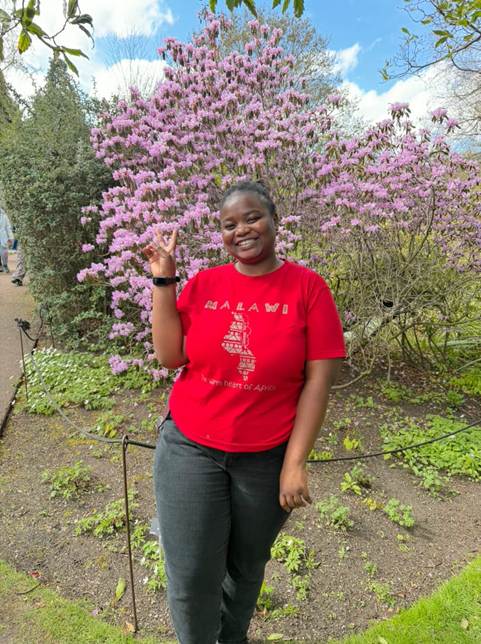
Picture 1: Author at the Botanic Gardens
The Field Begins Before You Arrive
Looking back, the field began long before our first virtual meeting with SIAS.
Preparation sessions on Nepali culture, community forestry, migration, and climate vulnerability were more than background information. They quietly shaped how we would listen, interpret, and position ourselves as learners before we had even met our partners in Nepal.
Ashrika Sharma’s session on culture and communication, where we practised simple introductions in Nepali, felt like an icebreaker at the time. Looking back, it was a lesson in humility – an early lesson in what Koch calls deep listening, the recognition that entering the field requires not just cultural courtesy but a willingness to suspend your own frameworks and remain open to being genuinely challenged by what you encounter (Koch, 2020). Peter Branney’s lecture on community forestry unsettled a different assumption: that development has a finish line. Migration and remittances were leaving ageing communities managing forests with shrinking labour, revealing development as something continuously negotiated rather than achieved.
Learning Nepal’s Development Complexities from a Screen
I got a glimpse of Nepal’s development complexities at the Royal Botanic Garden Edinburgh, where we watched Herne Katha films documenting human–wildlife conflict between farmers and monkeys in rural Nepal. My first reaction was technical: why not implement stronger management solutions? Later, during presentations with the SIAS researchers and partners, they quickly dispelled that instinct. Wildlife governance in Nepal is shaped by conservation commitments, cultural values that regard animals as sacred, and ethical debates about coexistence.
The conflict was not simply a problem awaiting a solution. It was a negotiation between livelihoods, conservation priorities, and social values.
Sessions on migration revealed similar complexity. What initially appears as climate-driven displacement is intertwined with labour markets, gender dynamics, caste relations, and changing aspirations. Across discussions on agriculture, water governance, and livelihoods, a consistent lesson emerged: environmental challenges cannot be separated from social realities.
Climate stress affects agriculture; agricultural uncertainty drives migration; migration reshapes labour systems and community governance. Each issue connects to another. Understanding development required seeing these relationships rather than isolating individual problems.
This was perhaps the most important lesson the SIAS sessions offered: that meaningful engagement with environment and development requires resisting the urge to simplify. Complexity is not an obstacle to understanding; it is the understanding.
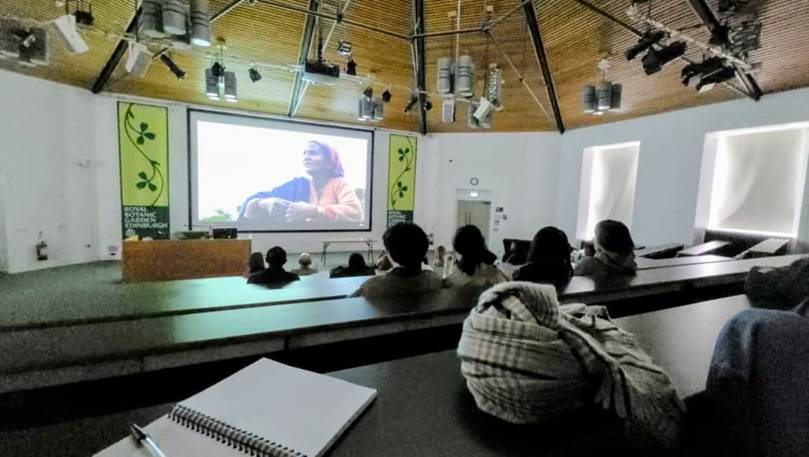
Picture 2: The Herne Katha Film on wildlife conflict
The Invisible Labour of Fieldwork
Working remotely with SIAS made visible something traditional fieldwork narratives often overlook: the labour and care that make research possible in the first place.
Meetings were coordinated across time zones. Connectivity disruptions were patiently navigated. SIAS colleagues adjusted their schedules, even during Nepali New Year celebrations, to sustain our learning. This effort rarely appears in fieldwork reports, yet it shapes every research encounter. Staddon and Barnes (2025) describe this as a “care-full praxis” — where access to the field is not an entitlement but something earned through trust, reciprocity, and ongoing relationship. Being welcomed into SIAS’s networks of researchers, practitioners, and communities was, in their framing, less like gaining entry to a research site and more like being received with care. That reframing stayed with me.
Recognising this shifted how I understood my own role. I was not an independent researcher arriving at a field site. I was participating in relationships built through years of collaboration, long before I joined the course, relationships that I had a responsibility to honour rather than simply use.
Remote engagement also exposed inequalities embedded in digital research. Connectivity challenges were not merely technical inconveniences; they were reminders that participation in knowledge production depends on infrastructure and access and that those with the least reliable connectivity are often those whose perspectives matter most. At the same time, distance sharpened my attentiveness in unexpected ways. Without sensory immersion, I found myself noticing facilitation styles, conversational dynamics, and whose voices were amplified or spoken over aspects of the research encounter I might easily have missed in a physically immersive setting.
Rather than weakening fieldwork, remote collaboration revealed its relational foundations. The field was never just a place. It was always a set of relationships — and engaging with it responsibly meant recognizing the care that sustained those relationships from the other side of the screen.
Who I Was in the Field
Engaging with Nepal from Scotland also required confronting my own positionality.
As a Malawian student studying in the UK, I occupied a layered outsider position — familiar with Global South development realities, yet external to Nepal’s specific cultural and institutional context. My background in disaster risk management often pushed me toward technical solutions before fully engaging with the social dimensions underlying them.
This became visible through our group research project. I chose to focus on spring water and rural livelihoods because water is deeply vulnerable to climate change and cuts across every other sector: energy, agriculture, and health. It is a cross-cutting issue I had encountered in Malawi, and I assumed that familiarity would translate. It did not. Working with our SIAS partners to refine our research questions and then collecting data on the day itself dismantled several assumptions I had carried in. Development problems, I came to understand, are not simply technical challenges waiting for the right intervention. They are shaped by social dynamics, power relations, and group identities that resist easy generalisation even when the issue looks familiar from the outside (Cornwall, 2007).
The course concluded with a gathering in the Cairngorms National Park. Away from screens and time zones, conversations with classmates revealed how differently each of us had processed the same experience. On the last day, we shared photographs with the SIAS team. What struck me was how everyone had captured something different, and even when two people had photographed the same place, the meaning they attached to it was entirely their own. That moment made something concrete what Rose argues theoretically: knowledge is always situated. Fieldwork never produces a single, neutral understanding. What we see, and what we make of it, is shaped by who we are, where we come from, and how we choose to engage.
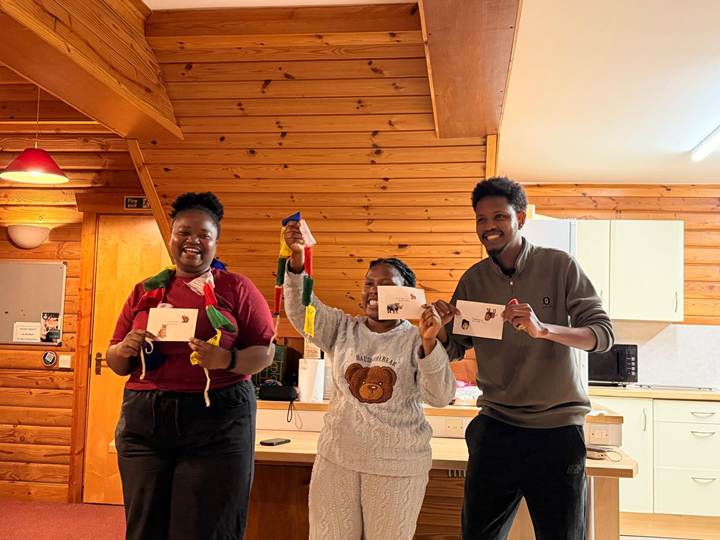
Picture 3: At the Cairngorms after game night
A Blessing in Disguise
What began as disappointment ultimately became a blessing in disguise.
Engaging with Nepal from Scotland showed me that the field is not defined by travel but by relationships. It is not a place we arrive at, but a space we enter through collaboration, attentiveness, and responsibility.
This experience reshaped how I understand environment and development research and how I hope to practice it in disaster risk management. Whether remote or in person, meaningful fieldwork demands humility, reflexivity, and accountability to those whose knowledge makes learning possible (Koch, 2020).
The field, I learned, is not somewhere we go. It is something we carry forward long after the course ends.
Reference:
Cornwall, A. (2007) ‘Buzzwords and fuzzwords: deconstructing development discourse’, Development in Practice, 17(4–5), pp. 471–484. Available at: https://doi.org/10.1080/09614520701469302.
Koch, N. (2020) ‘Deep Listening: Practicing Intellectual Humility in Geographic Fieldwork’, Geographical Review, 110(1–2), pp. 52–64. Available at: https://doi.org/10.1111/gere.12334.
“Views expressed here are personal and not associated with any affiliated organisations”