
By Dr. Sam Staddon, University of Edinburgh
Blog for SIAS on our SIAS-UoE trip 2026
‘Beyond being there’
A wonderful alumnus of ours, (now Dr.) Peter Rowe, who was part of our first ever SIAS-UoE Nepal trip back in 2019 (and reflected on that here), kindly came along to talk to this year’s students to share his experiences and suggestions on conducting remote research. This was necessary as our trip to Nepal could not take place this year due to the West Asia war and related travel restrictions, and so just a few weeks before we were due to leave Edinburgh for Kathmandu, we had to switch everything to a remote partnering and learning experience. Peter’s insights were vital to the students in working out how to negotiate this new reality, and we heard this in their group research project presentations when they told us how they’d put Peter’s advice into action. Peter had titled his talk to the students “Beyond being there” and told them “Remote research is not about trying to replicate ‘being there’ – if you go with that mindset then you’ll be disappointed”. Unsurprisingly, our students were definitely of that mindset and were certainly disappointed – at least to start with – but I am borrowing Peter’s phrasing of ‘beyond being there’ to explore the benefits that he claimed still came along with remote research. I wish to dig into the partnerships and learning that have always been at the heart of our trips and consider how those have played out over the last two weeks of remote engagements.
In order that we didn’t simply remain stuck in a Zoom meeting however, like we had to during the pandemic (as reflected upon here and here), we did make the most of staying in Scotland by experiencing Nepali New Year at the Himalayan Centre in Edinburgh, spending a day at the Royal Botanic Gardens Edinburgh with Nepal-focused botanists, and a four-day trip to the Scottish Highlands which included engaging with staff from the Cairngorms National Park Authority. Likewise, in Nepal, SIAS staff did not remain in Kathmandu the entire time, but rather they travelled to Bandipur in order to carry out primary research with rural villagers and local decision-makers, bringing our students in on-line, to help in conducting focus groups discussions and interviews.
Partnering – relationships and connections between people and place
Our SIAS-UoE Nepal trip has always been about partnerships, and students gaining first-hand experience of what that involves and feels like. In preparations for our travels to Nepal, we read about and share our thoughts on what ‘equality’ in those partnerships and ways of engaging might look like, and emphasise embodying a praxis of ‘access as love’ (Guasco 2022). Whilst this is perhaps easier to grasp when we’re all physically together (as reflected on here), working remotely still offers opportunities to learn about what ‘partnership’ can mean in practice. Partnerships are about connections between people and places, and these relationships have been evident at every stage of our two-week remote experience.
The fact that we could pivot so quickly, and offer our students a (hopefully) rich and rewarding learning experience reflected the deep relationship that exists between the University of Edinburgh and SIAS – both institutionally and as individuals. From our side at the university, we knew instantly that we could trust SIAS and especially our coordinator Sanjaya Khatri, to know what would be appropriate for our students and what could still deliver the learning outcomes of their programme of study. He was able to bring speakers from Kathmandu into our Edinburgh classrooms online [figure 1], and to re-arrange our research work in Bandipur to accommodate the students working remotely, as well as to reassure people there of the value of participating. The care and attention he took in re-working everything, including with his SIAS colleagues, does not go unnoticed – even from a distance – and it is these great skills in relational work that keep bringing us back to SIAS, and thus to Nepal, every year.
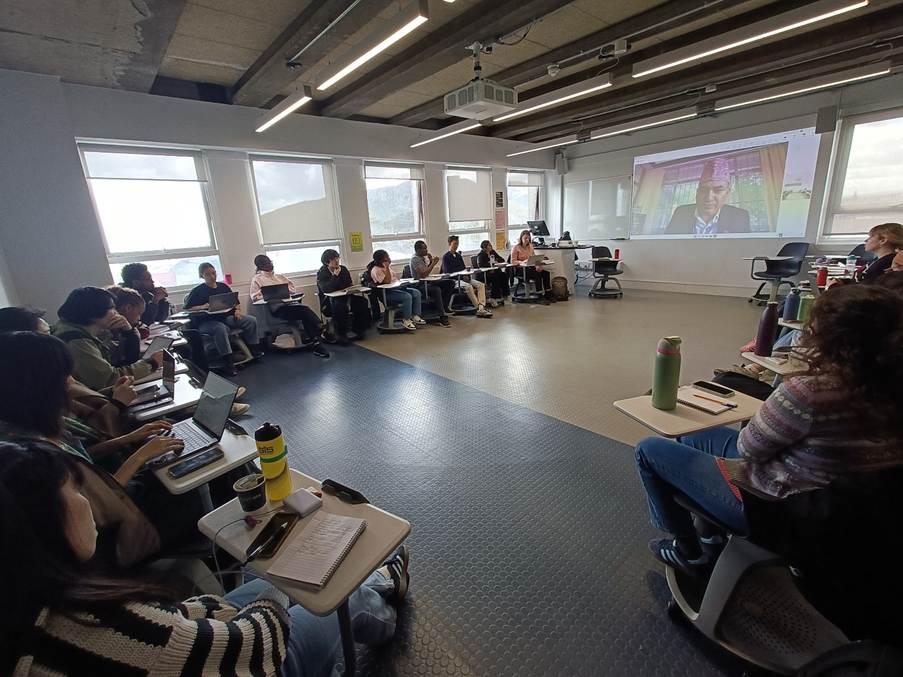
Figure 1. Speakers from Nepal joined us online in Edinburgh. Pictured here on the screen is Nabaraj Pudasaini, Joint Secretary, Ministry of Forest and Environment, Government of Nepal.
Here in Scotland, being able to lean into existing relationships – for example with the Royal Botanic Gardens Edinburgh and the Himalayan Centre – showed us how much people cared about our student’s plight in not being able to travel, and how much they were willing to do in order that they could still learn about Nepal’s natures [figure 2] and cultures [figure 3]. We are so grateful to them for this, and we do hope that we can return the favour at some point in the future, to demonstrate that. We were also able to establish new relationships through this experience, for example with the Himalayan Café in Edinburgh, who again, went out of their way to extend genuine hospitality and warmth, that is so true to experiences of being physically in Nepal.
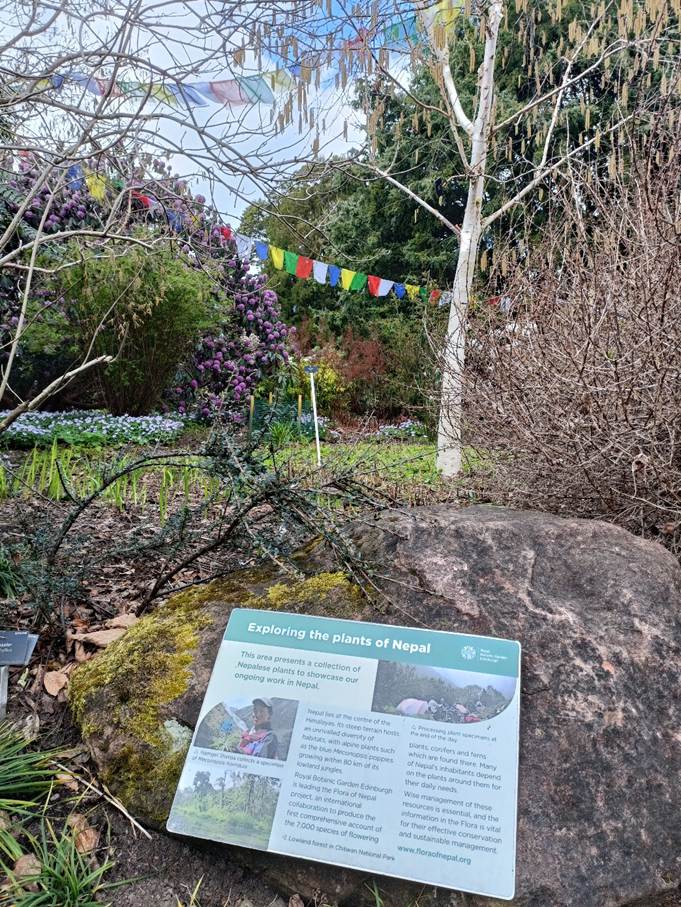
Figure 2. We spent a day at the Royal Botanic Gardens Edinburgh, where their botanists Mark Watson, Colin Pendry and Bhaskar Adhikari went out of their way to tell us about their work and partnerships in Nepal, and to take us around the Gardens, including glasshouses currently not open to the public and to this area dedicated to the plants of Nepal.
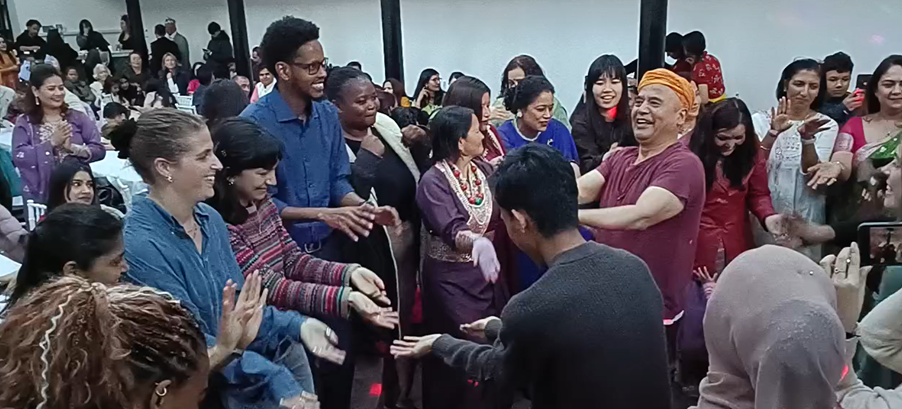
Figure 3. We celebrated Nepali New Year at the Himalayan Centre, Edinburgh. We received such a warm welcome, and students loved being encouraged to join in the dancing, as captured here in a screenshot from a video taken on the night.
Relationships and connections between people and place were also a – potentially unexpected – feature of our trip to the Scottish Highlands. The need to nurture relationships was particularly evident in the work of those who came to spend the afternoon with us from the Cairngorms National Park Authority [figure 4]. As national parks in the UK are not state-owned (unlike in many other countries), these staff have to work hard to build trust and respect with those who own, manage and use the land on a daily basis – without such partnering, their work of conserving and enhancing the natural and cultural heritage of the area would simply not be possible. We heard how the Cairngorms 2030 Plan is inspired by the Gaelic* term Dύthchas, which ‘encompasses ideas of kinship, heritage and connections between nature, people and place’ (and has no direct translation in English). It was – to me – reassuring to hear the explicit centring of a relational approach, and recognition of the work that is necessary to put that into practice in meaningful ways. This speaks to me of the politics of partnering, and of attempts to embody ‘access as love’ (Guasco 2022), where ever it is in the world that you are working.
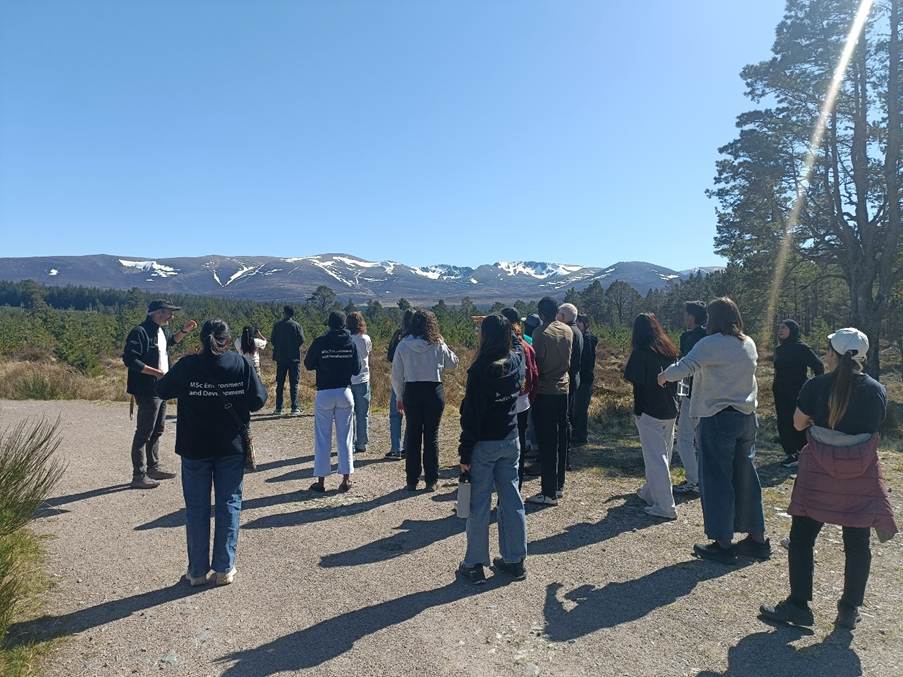
Figure 4. We were lucky to spend the afternoon with Chris Mackie and Mike Cottam from the Cairngorms National Park Authority in the Scottish Highlands – here we were looking over the Rothiemurchus forests to the snowy tops of the Cairngorm mountains. Chris took us to this spot to ‘set us in time and place’, sharing insights into the geological timescales of the area, and its constantly changing human uses – which 250 years ago included transhumance practices, much like those that continue in parts of Nepal to this day.
Learning – from our place within relationships and connections
I (re-)learnt from our trip to the Cairngorms that it is not only relationships and connections that matter though, but rather it is about our place within them. Chris Mackie (Knowledge Exchange Officer for the Park Authority), relayed something he’d once been told which has continued to inspire him in his work; “look for the position of most usefulness”. He shared this in reference to him having to spend a lot more time in the office than he’d like – given that the physical work of caring for the land is actually done by owners, managers and users, with him ‘most useful’ as a facilitator for that, much of the time from behind a desk and at a distance. These last two weeks have been about engaging with Nepal ‘from a distance’, and that too is frustrating in so many ways – we’d have loved to have wondered the streets of Kathmandu and hillsides of Bandipur together; observing, listening, tasting, smelling, feeling, and making the most of chance encounters with people and more-than-human nature – those unexpected moments that are so significant in how we come to understand and learn about a place and its people.
However, it is clear that we have still learnt an awful lot, despite the (physical) distance. In their group research project presentations, students revealed just how much they had learnt about current environment and development challenges in Nepal; from water security to human-wildlife conflict, from climate change to community forestry, and from out-migration from rural areas to the aspirations of those who choose to remain. On the final day of our time together, in our ‘Closing Ceremony’, students spoke eloquently to the connections between these challenges and those of environmental governance and justice they’d started to learn about in Scotland. They also revealed embodied learning about the joy of partnership working, particularly through their group research projects on which they collaborated with specific senior and junior SIAS staff. On completing the data collection phase of their research, students shared how warm and encouraging their Nepali colleagues had been, how generous they were with their time and expertise – one student even exclaimed how they “loved Sanjaya!”. I am so glad that this important learning could still take place, and again, am so grateful for our on-going partnership with SIAS that made it possible.
This learning is also timely and significant, as it equips our students for the potentially ‘most useful’ positions in which they might find themselves working in the future. Being able to partner remotely and equitably with those around the world, across countries, and even within our communities, is increasingly demanded by decolonial and justice-centred approaches to ‘development’ and environmental governance, and I am glad that our students have been able to gain experience and skills in this. Given their qualifications, many will find themselves working in the cities and international centres of the environment and development sector, no doubt at least partly removed from the lived realities of those experiencing injustices and inequalities whom they seek to support – be they rural or urban. We learn in class about the importance of plural perspectives, epistemic justice and the politics of ‘expertise’, and attempt to grasp the deep-seated exclusions and repercussions created by colonialism and capitalism. The very same systems that make some people and places marginalised and vulnerable, create the privilege that many of us experience in our places of work and/or personal lives. Our collective privilege, in being (currently) located in a Minority World leading university, is all-too obvious when comparing the impact of the West Asia war on us (i.e. of not being able to travel physically to Nepal), to the thousands of Nepalis who face the existential threat of violence from the war in the Gulf countries in which they are working, reduced incomes that are needed to repay loans and support families in Nepal, and inabilities to return home to their loved ones.
In sharing their fears of working remotely at the start of our ‘trip’, students voiced concerns about not being able to learn about their positionality in an embodied way. I would argue that our ability not to physically travel, is one of the clearest expressions of our positions as privileged – particularly as we were still able to enjoy a rich and rewarding learning experience with amazing colleagues in Nepal, and (new) collaborators here in Scotland. Sitting with this privilege can certainly feel uncomfortable – but given the distance that many students’ professional positions may create between them and those they seek to support in their work, it is a feeling that it is important to start to grapple with and learn from.
On balance – the best of both worlds?
I’m not going to lie – I’d have loved for us all to be able to travel physically to Nepal. I honestly believe the trip is a unique space and time for critical learning and crucial love (as reflected on here), and am so thrilled that our students have experienced and captured that in their wonderful film from last year’s trip (available to watch here). Confirming fears that I shared last year (here) however, the University of Edinburgh is unwilling to ‘match intentions with investments’ in this learning experience, and next year will be the last time we travel to Nepal for this course. As someone who established this course – and who has a deep love for Nepal, SIAS and what our students can learn from them – I am truly gutted for this loss, and am already grieving for the other restrictions and reductions to our programme that are being implemented by senior university leaders – many of us believe unnecessarily, and with negative consequences for our future students.
However, our (still to be determined) new academic offering will include time in ‘the field’, and this may possibly involve travel to the Cairngorms, perhaps drawing on new relationships established this year. My amazing colleague (and co-conspirator on this course trip), Clare Barnes, is already on the case of thinking through ways in which remote partnership and exchange with Nepal and SIAS might also happen as part of that. Might it be ‘the best of both worlds’ to be able to connect experiences and relationships between Scotland and Nepal? Might embodying different places within those relationships enable learning that helps us all move towards more decolonial and just futures? Or might it be that we’re being greedy, again revealing our privilege? That all remains to be seen. For now, I am looking forward to reading about our students’ experiences and learnings from this year when they submit their individual reflective essays next week…and of course, to travelling to Nepal for our last course trip next year.
A few weeks on: I am so thrilled to see how our students experienced this year’s learning experience, as reflected on in these blogs by Shapil Ngutwa “A Blessing in Disguise: Engaging with Nepal from Scotland“, Meadow Solares “Opportunity Through Redirection” and Yuefei Wu “Opening My Lens: When Distance Becomes a Way of Seeing“.
* Gaelic language and culture are indigenous to Scotland.
“Views expressed here are personal and not associated with any affiliated organisations”