
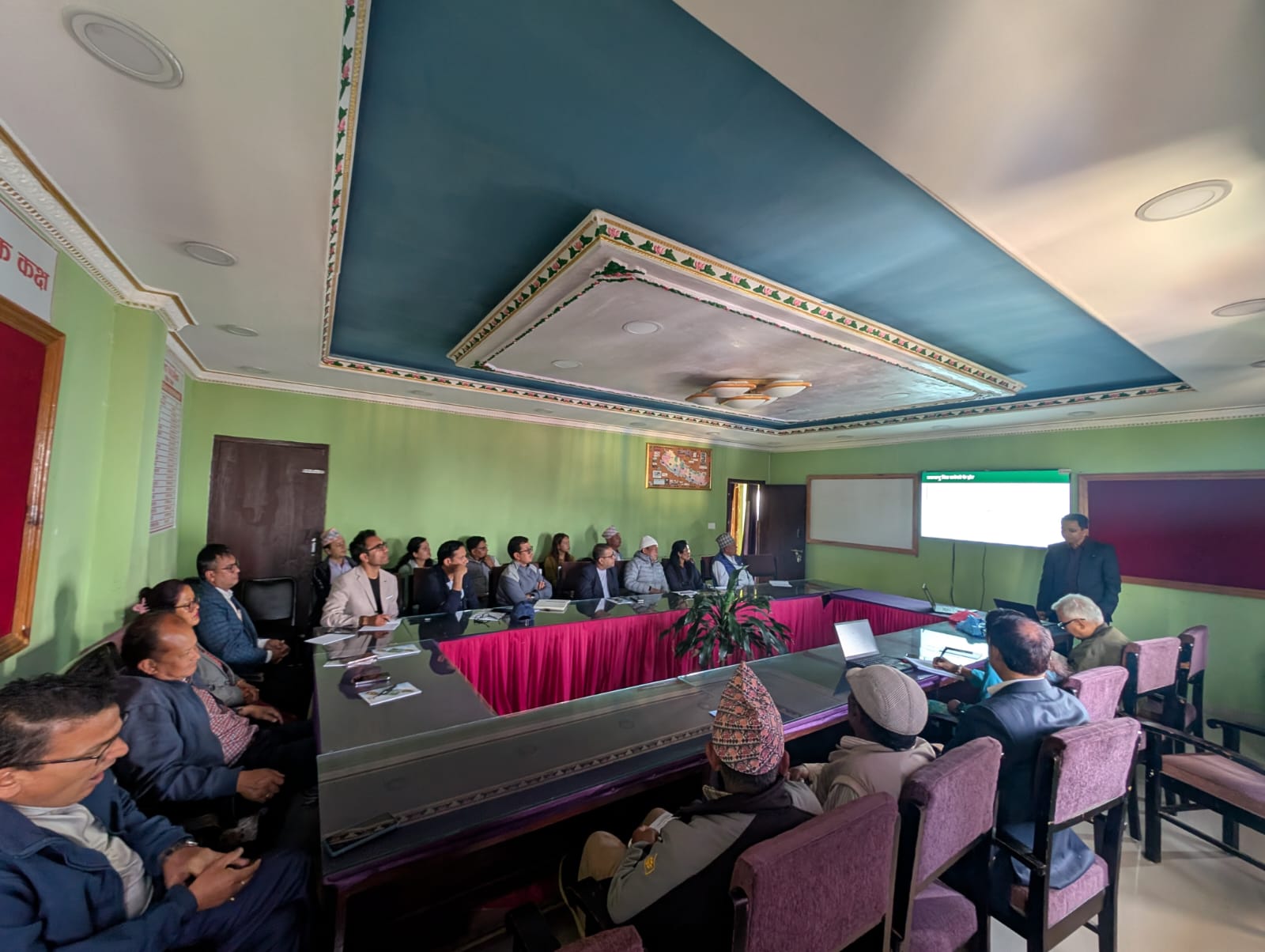
The Southasia Institute of Advanced Studies (SIAS), Kathmandu, in collaboration with its local partner, the Federation of Community Forestry Users Nepal (FECOFUN), Dolakha District, organized a multi-stakeholder dialogue on “Nepal’s Access to Climate Finance and Financial Governance” on 2 June 2026 at the Bhimeshwor Municipality, Dolakha. The event brought together representatives from local government, line agencies, financial institutions, and development organizations to discuss opportunities and challenges related to climate finance and its governance in Nepal.
The program was conducted in presence of the Mayor and Deputy Mayor of Bhimeshwor Municipality, the Chief Administrative Officer, the Head of the Agriculture Section, representatives from the Division Forest Office (DFO), Dolakha , the Manager of the Agricultural Development Bank Limited (ADBL), officials from the National Agricultural Modernization Program, representatives of District FECOFUN, and other local stakeholders. The program was facilitated by Mr. Jagannath Basnet of FECOFUN Dolakha.
The first presentation was delivered by Dr. Maniram Banjade, Senior Research fellow at SIAS who provided an overview of climate change and its impacts in Nepal. He highlighted Nepal’s high vulnerability to climate change despite its negligible contribution to global greenhouse gas (GHG) emissions. He discussed the increasing frequency and intensity of climate-induced disasters such as floods, landslides, droughts, forest fires, and glacial lake outburst floods (GLOF), and their impacts on livelihoods, agriculture, water resources, biodiversity, and infrastructure. Dr. Banjade also shared the current status of climate finance globally and in Nepal, explaining the growing importance of climate finance in supporting adaptation and mitigation efforts. He emphasized the need to strengthen institutional capacity and improve access to climate finance so that vulnerable communities can effectively respond to climate-related risks. The second presentation was delivered by Mr. Krishna Gyawali, former Secretary of the Government of Nepal, who focused on climate finance governance and Nepal’s transition from a Least Developed Country (LDC) to a Developing Country. He highlighted both the opportunities and challenges that Nepal may face in mobilizing climate finance in the post-graduation period and emphasized the importance of strategic planning and effective governance mechanisms. Mr. Gyawali further explained the climate-related budgeting and public financial management system in Nepal. Using examples from the Fiscal Year 2083/84 budget, he demonstrated how budget codes are formulated and tracked across the federal, provincial, and local government levels. He explained the mechanisms through which climate-related expenditures are integrated into government planning and budgeting processes and highlighted the importance of transparent and accountable financial governance to ensure that climate finance reaches intended beneficiaries and contributes effectively to climate action.
The presentations were followed by an interactive discussion among participants. Stakeholders shared their experiences and perspectives regarding access to climate finance, challenges in implementation, local-level priorities, and institutional constraints.
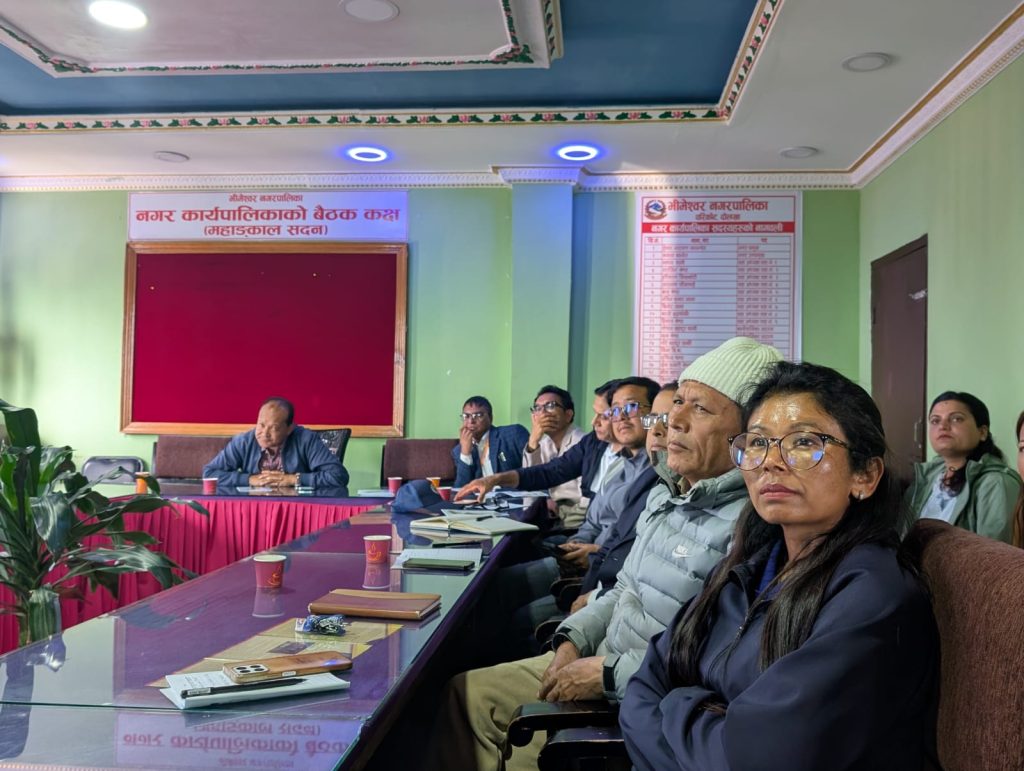
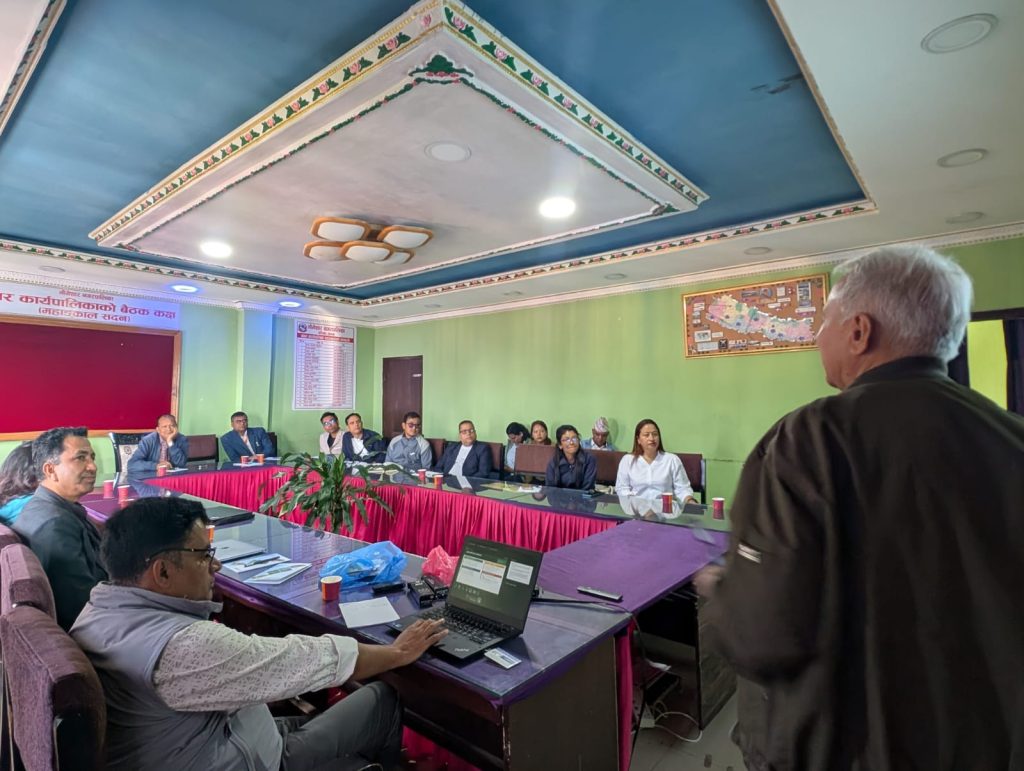
Pictures: Event at Bhimeshwor Municipality Hall, Dolakha