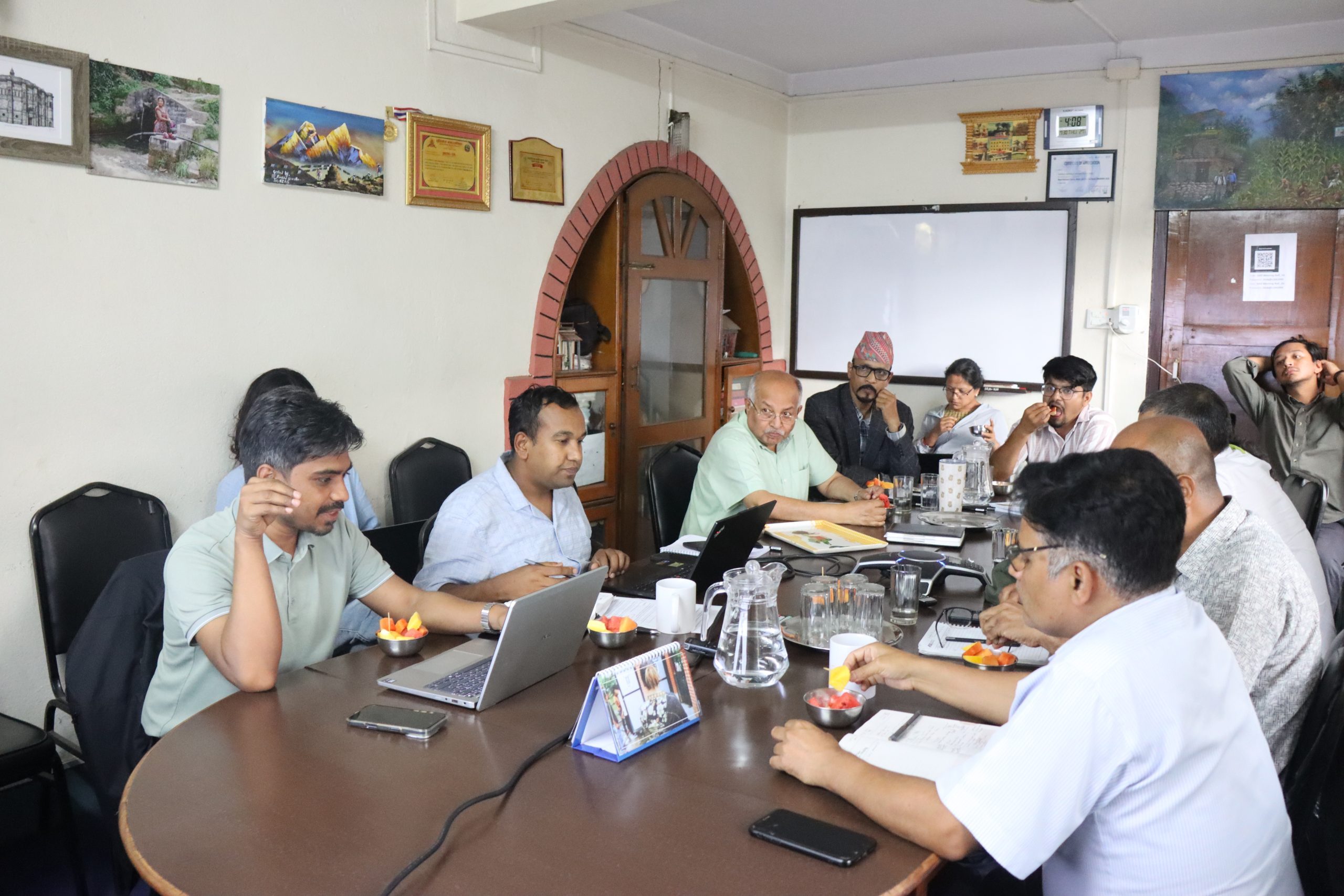
On 30 July 2026, SIAS successfully organised the Future Himalayan Research Seminar titled “Securitisation of the Nepal-India Border: Discourse, Practices, and Everyday Lives of the Borderland Madhesi Population.” This event featured a hybrid presentation and focus group discussion led by PhD researcher Mahesh Kushwaha, who shared the progress and initial findings of his ongoing doctoral research on the securitisation of the Nepal-India border. The session aimed to explore how shifting border narratives and practises impact the identity and lived realities of borderland populations. The session began with opening remarks by Mr. Sanjaya Khatri, Researcher at SIAS, who welcomed participants and introduced the presenter.
Research Overview
Mahesh’s research challenges Eurocentric border discourse by applying securitisation theory to the unique context of South Asia. While traditional theory views the state as the primary actor and borderland residents as a passive “audience,” this study seeks to give agency to the people living along the border to understand how their sense of belonging and security evolves amidst increased state regulation.
The methodology involves a triangulated approach, combining Critical Discourse Analysis with multi-sited ethnography and semi-structured interviews, to be conducted in the upcoming months.
Key Discussion Themes
The subsequent interactive session brought together researchers, educators, and students to discuss the changing dynamics of the Nepal-India relationship. Several critical themes emerged:
- Hardening of the Border: Participants noted a significant shift from a historically “seamless” border to one characterized by increased Armed Police Force (APF) presence (rising from 2 in 2007 to 227 outposts in 2022) and the introduction of new regulatory practices and monitoring technologies.
- “Mental Bordering”: Beyond physical fences, a process of “mental bordering” was discussed, where bureaucratic hurdles and nationalist discourses are psychologically distancing populations on either side.
- Evolving Livelihoods and Kinship: The discussion highlighted a significant decline in cross-border marriages and shifting economic patterns, where traditional “border haats” are being replaced by formal Integrated Check Posts (ICPs), impacting the local poor more than the elite.
- Nationalism and Identity: Participants debated how “suspect citizenship” and exclusionary nationalist narratives in Kathmandu often frame the borderland population as a security threat, even as these communities maintain deep cultural and religious ties to India.
Conclusion
The event concluded with a reflection on how this research contributes to a less Eurocentric understanding of border studies. By elevating the voices of those at the periphery, the project also aims to provide a more nuanced measure of security, one rooted in the everyday experiences and human values of the people living at the edge of the state.